Build 2026: Microsoft Announces Surface RTX Spark Dev Box For Local AI Development on Windows 11
New tools and runtime features expand AI development capabilities within the Windows ecosystem.

Key Takeaways:
- Microsoft’s Surface RTX Spark Dev Box supports large AI models with up to 1 petaflop of compute.
- The new execution containers enable secure AI agent runtimes.
- The GitHub Copilot app and Project Rayfin expand developer workflows.
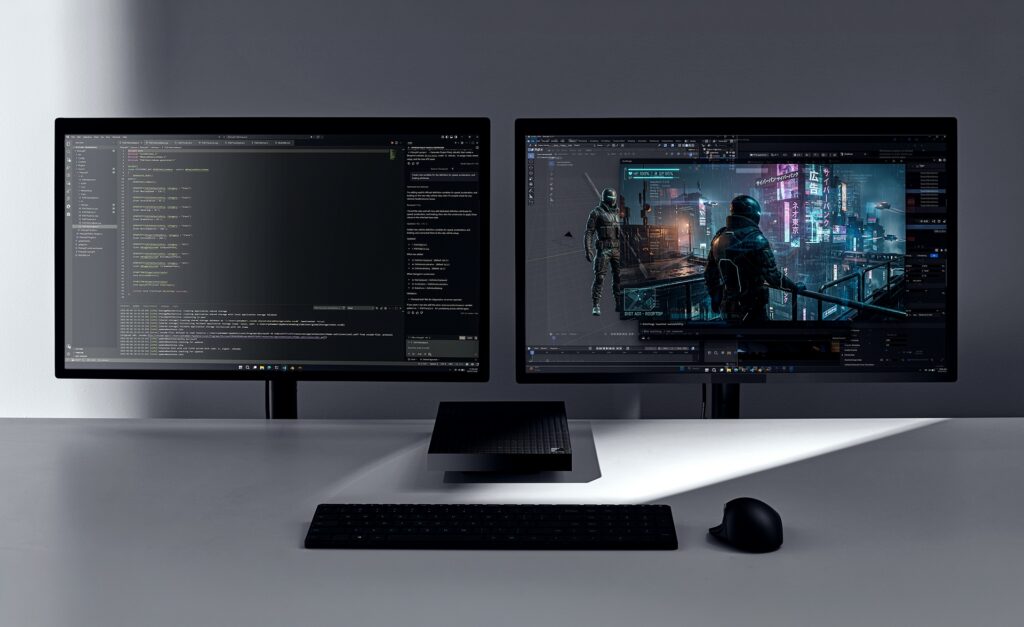
Microsoft has just announced updates to make Windows a trusted platform for AI development. Among the announcements was the Surface RTX Spark Dev Box, a developer-focused device designed to run advanced AI models and workloads locally with high performance.
Microsoft’s Surface RTX Spark Dev Box is designed for tasks like training AI models, running complex agent-based systems, and fine-tuning large models without relying heavily on cloud resources. It will be available for US-based customers later this year.
“Powered by NVIDIA RTX Spark, it delivers up to one petaflop of AI compute and 128 GB of unified memory, capable of running up to 120B parameter models locally without cloud GPU instances. WSL 2 with native GPU passthrough and full CUDA support comes pre-configured for developers, with Visual Studio Code, GitHub Copilot and many more of your favorite tools pre-installed,” Microsoft explained.
Microsoft emphasized that its Surface RTX Spark Dev Box is built on chip-to-cloud security aligned with Microsoft’s Zero Trust principles. It also provides integration with Microsoft Intune and Microsoft Entra ID for management and governance at scale.
Microsoft Execution Containers
Microsoft is also making Windows an agent-native runtime with the launch of Microsoft Execution Containers (MXC) in preview. This feature provides secure, isolated environments for running AI agents and applications. Instead of manually setting up protections, developers can define their requirements once, and the operating system automatically enforces those rules wherever the agent runs.
OpenClaw on Windows
OpenClaw on Windows allows AI agents to carry out multi-step tasks securely within controlled environments on Windows 11 systems. It works with Microsoft’s Execution Container feature to ensure that these agents operate inside isolated, system-managed boundaries, which helps maintain security and consistency.
As for the developer tools, Microsoft has launched the new GitHub Copilot app in preview, which brings agentic development to a native desktop experience. It allows developers to start from an idea or existing task and manage multiple coding sessions at once, while automatically handling steps like execution, testing, and updates.
Lastly, Microsoft has launched Project Rayfin in preview, a platform designed to simplify the process of turning ideas into apps. It provides a managed backend service that integrates with developer workflows, which allows teams to move from prototype to production without handling complex infrastructure setup.

Rabia has a master's degree in Software Engineering and she has years of experience writing professionally about Microsoft products and other technologies. Rabia has also written for OnMSFT.com as well as Windows Report. She is always up to date on t...