GitHub App for Microsoft Teams Hits General Availability
Microsoft has made the GitHub app for Teams generally available, bringing GitHub Copilot, repository management, and development workflows into a single collaboration experience. For organizations, the update could reduce context switching between Teams and GitHub while introducing new governance considerations.

Key Takeaways:
- The GitHub app for Microsoft Teams is now generally available.
- Users can access GitHub Copilot, notifications, pull requests, and repository actions directly from Teams.
- Organizations may need to review licensing, governance, and access controls before deployment.
Many organizations collaborate in Microsoft Teams, but software development workflows often remain fragmented across separate tools. Developers, support teams, and business stakeholders must constantly switch between Microsoft Teams conversations and GitHub to track issues, review code changes, respond to notifications, and coordinate work. This context switching can slow decision-making and make it harder to connect discussions with the resulting code changes.
When collaboration and development work are split across multiple applications, teams risk losing context, delaying responses to issues, and creating communication gaps between technical and non-technical stakeholders. Organizations looking to use AI-assisted development may also struggle to bring relevant conversations, project context, and repository data together in one workflow.
GitHub Copilot and repository tools move into Microsoft Teams
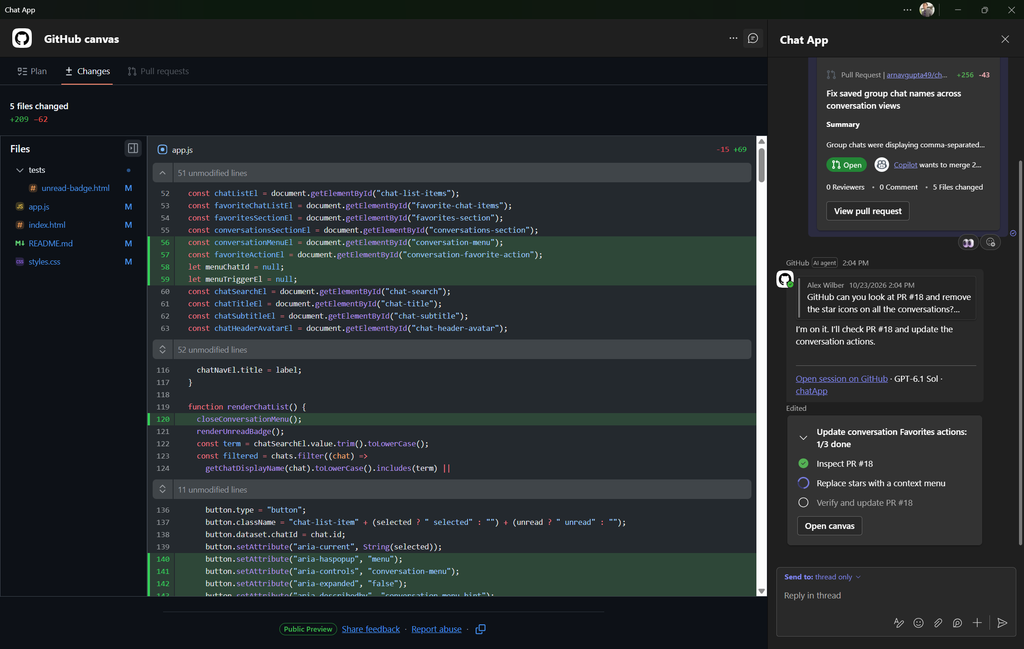
Microsoft and GitHub have made the GitHub app for Microsoft Teams generally available, allowing users to interact with GitHub Copilot directly within Teams conversations. This release introduces several improvements, including a new GitHub Canvas for reviewing plans, file changes, and pull requests without leaving Teams, consolidated notifications and Copilot capabilities in a single app, multi-repository support, and integration with external tools through MCP servers. Users can also choose AI models for different tasks and manage repositories using natural language prompts.
This app is designed to help support, engineering, and business teams collaborate around software projects in a shared workspace, which enables conversations to evolve into issues, code changes, and pull requests without switching applications. Attribution features also provide visibility into who initiated work and the Teams discussions that led to it.
Organizations should review governance and licensing requirements
While the tighter integration could streamline collaboration and accelerate AI-assisted development workflows, organizations must meet several administrative and licensing requirements before deployment. IT teams need to enable appropriate Teams permissions, allow the app through the Teams admin center, and ensure that required GitHub Copilot features, cloud services, and licenses are configured.
As development activity becomes more deeply embedded within Microsoft Teams, organizations may also need to pay closer attention to governance, access controls, and oversight of AI-generated code.

Rabia has a master's degree in Software Engineering and she has years of experience writing professionally about Microsoft products and other technologies. Rabia has also written for OnMSFT.com as well as Windows Report. She is always up to date on t...