One Copilot to Rule Them All? Microsoft’s Unified AI Platform for Work and Life
Microsoft’s AI consolidation promises a smoother Copilot experience, but it may also deepen customer dependence on its ecosystem.

Key Takeaways:
- Microsoft is unifying consumer and enterprise Copilot into one platform to reduce fragmentation and create a more seamless AI experience across work and personal use.
- The strategy may improve product coherence and speed innovation, but it also increases the risk of deeper customer lock-in to Microsoft’s cloud, apps, identity, and AI stack.
- For IT leaders, the big questions are governance and control: data separation, admin policies, licensing, and how to manage Copilot across both personal and business contexts.
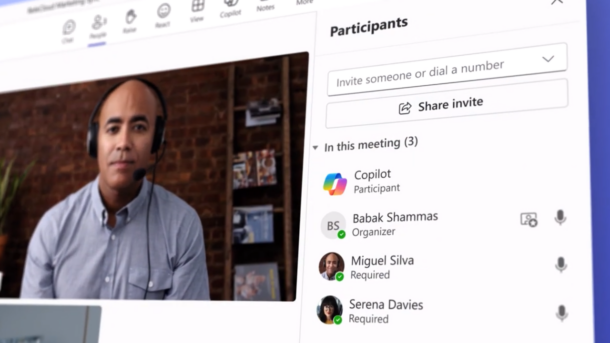
Microsoft went all-in on One Copilot earlier this year. In March 2026, CEO Satya Nadella reorganized the company’s AI efforts, consolidating the consumer and enterprise Copilot teams under one unified leadership. That means Microsoft’s once-separate personal and business Copilot projects, like Copilot for individuals and Microsoft 365 Copilot for enterprises, are now being built as one platform with a single boss, Jacob Andreou, reporting directly to Nadella.
Microsoft’s rationale is that if Copilot is supposed to be the everyday AI assistant across everything you do, it’s better designed as a single, integrated system rather than a scattered collection of AI features.
This consolidation makes pragmatic sense for Microsoft. For one, it reduces fragmentation. Instead of two different AI assistants with separate capabilities and roadmaps, you will get one Copilot spanning Windows, Microsoft 365 apps, Teams, and personal accounts. The unified approach could also accelerate innovation by aligning every Copilot feature on one foundation, with shared AI models and design ethos.
So where’s the catch? In a word: lock-in.
One Copilot everywhere inherently rests on being deeply embedded in Microsoft’s platform (cloud, OS, apps) at every turn. It’s a good strategy for Microsoft, boosting the “platform gravity” that keeps customers orbiting their services.
But if you’re an IT leader trying to maintain flexibility, the unified Copilot approach may heighten your long-term dependency on Microsoft’s stack. The more your users rely on the seamless Copilot spanning their lives, the less room you’ll have to adopt alternate AI solutions or switch providers down the road.
In effect, Microsoft is making the case: stick with us, we’ll make AI easy everywhere. It’s a compelling pitch but be aware of the golden handcuffs.
A cautionary tale of Teams and Skype
Even as Microsoft’s Teams collaboration suite has become ubiquitous in business, it hasn’t matched the consumer reach of its predecessor Skype. Microsoft tried to collapse personal and enterprise communications into one platform, phasing out Skype in 2025 in favor of “Teams (Free) for personal use”. Even baking a “Chat with Teams” button into Windows 11 by default, which it has since removed.
But Teams hasn’t achieved the same consumer ubiquity Skype once had (the latter still boasted some 300 million monthly users as recently as 2019). This mixed track record of uniting enterprise and consumer experiences (with Teams still mainly perceived as a work app) stands as a cautionary tale for Copilot’s unification. It underscores that even sensible platform consolidation doesn’t guarantee broad adoption. Especially if consumers see the product as an enterprise tool rather than an everyday essential.
Copilot data and identity boundaries
There are also practical governance questions. When Copilot lives in both personal and business contexts, data and identity boundaries become paramount. Today, enterprise admins can control and configure Microsoft 365 Copilot or Windows Copilot separately via policies and settings (like toggling Copilot on corporate devices, for example).
Under a unified Copilot, how will Microsoft ensure corporate data stays completely separated from personal Copilot interactions? Today, this is enforced by forcing you to switch between Microsoft work and personal accounts. It provides clear separation but it doesn’t lead to an elegant user experience.
With Copilot integration pervasive, companies may need to update internal guidelines, training employees on personal vs. work usage and adjusting compliance rules for AI-generated content.
Microsoft MAI
Notably, the Copilot mega-merger coincides with another strategic shift: Microsoft’s launch of its first in-house AI models (nicknamed “MAI”) for speech-to-text, voice, and image generation. Rolled out in April 2026, these models are Microsoft’s hedge to reduce dependence on OpenAI’s tech. The move aims to give Microsoft more control over the AI stack powering Copilot for cost efficiency, scale, and customization.
In short, the unified Copilot vision is increasingly backed by Microsoft’s own AI engines, potentially making it an even more fully Microsoft-native platform going forward.
Convenience comes with deeper platform entrenchment
Unifying Copilot under one umbrella is a forward-looking bet from Microsoft. It could usher in seamless, contextual AI assistance, one that follows a user from writing a Word report to planning a family holiday, no disjointed handoffs or app-hopping needed.
For IT decision-makers and practitioners, the upside is a more coherent AI deployment (one platform to manage) and a workforce that can reap productivity gains.
Just go in with eyes open: convenience comes with deeper platform entrenchment. Now is a good time to ask questions about licensing, admin controls, and data segregation. And to fine-tune your governance policies for a world where Copilot is everywhere.

Russell Smith, the Editorial Director at Petri IT Knowledgebase, has over two decades of hands-on experience in IT, in both small business settings and government IT infrastructure projects. Russell started writing for Windows IT Pro Magazine in t...