Configuration Manager Moves to Yearly Releases as Microsoft Prioritizes Intune
Microsoft focuses on greater stability and a stronger move toward cloud-based management

Key Takeaways:
- Microsoft will move Configuration Manager to a once-a-year release cycle next year.
- The change focuses on stability, security, and easier planning for IT admins.
- Microsoft continues to push organizations toward Intune for future device management innovations.
Microsoft is streamlining its Configuration Manager updates by shifting to a predictable annual release cycle, starting with version 2609. The company has announced that this change will go into effect in Fall 2026.
Microsoft Configuration Manager (often called ConfigMgr or SCCM) is a systems management platform that helps IT administrators manage large groups of Windows-based computers. It enables centralized deployment and management of operating systems, software updates, applications, and security policies across an organization’s devices.
Intune takes center stage in Microsoft’s device management strategy
Previously, Configuration Manager updates were released twice a year. Microsoft says that moving to an annual schedule aligns with its focus on cloud-based management and gives IT teams greater predictability and stability in their planning. Hotfix rollups will now be issued only for urgent security or functionality issues, while critical patches will continue as needed. Microsoft is also encouraging customers to transition to its Intune solution for hardware management.
“This change is a formalization of the direction we’ve communicated at events and in customer conversations. Microsoft Intune is the future of device management, and all new innovations will occur there. Configuration Manager will continue to serve your on-premises devices, with a renewed focus on security, stability, and long-term support,” Microsoft explained.
Upcoming Configuration Manager releases and timeline
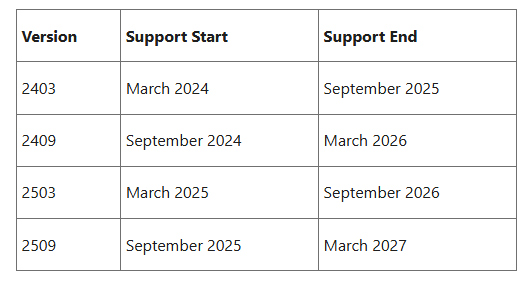
The upcoming Configuration Manager releases are structured to support a smoother transition to the new annual update model. The December 2025 release (version 2509) will emphasize system stability and introduce support for ARM64 architecture. In March 2026, version 2603 will bring security improvements aligned with Microsoft’s Secure Future Initiative.
The first official annual release (version 2609) is scheduled for September 2026. Microsoft plans to roll out version 2709 in September 2027, which will focus on future-oriented enhancements, though specific details are yet to be announced.
Industry reactions and the road ahead
Overall, migrating from Configuration Manager to Microsoft Intune is a significant shift that many IT professionals are approaching with caution. While Intune offers the advantages of cloud-based management, it currently lacks some of the deep control and granular features that Configuration Manager provides for on-premises environments.
This gap has raised concerns in the IT community, with many professionals questioning feature parity and readiness. The recent retirement of Windows Server Update Services (WSUS) has further fueled discussions, which prompted many to reconsider their long-term strategies for endpoint management.

Rabia has a master's degree in Software Engineering and she has years of experience writing professionally about Microsoft products and other technologies. Rabia has also written for OnMSFT.com as well as Windows Report. She is always up to date on t...