Parallels Desktop 27 Adds OpenGL 4.3 Support and AI Acceleration for Apple Silicon Macs
New enterprise, DevOps, and virtualization enhancements help organizations support demanding Windows workloads on Macs.

Key Takeaways:
- Parallels Desktop 27 introduces a Metal-based graphics driver with OpenGL 4.3 support for Windows VMs.
- Apple SME support enables faster AI and machine learning workloads on M4 and newer Macs.
- New enterprise and DevOps features simplify virtual machine management, automation, and license administration.
Parallels has launched Parallels Desktop 27, the latest version of its virtualization software for Apple silicon Macs. The update expands support for demanding Windows applications, delivers improved graphics performance, and adds new AI acceleration features for developers.
With the just-released Parallels Desktop 27, Parallels has introduced a new Metal-based graphics driver that provides OpenGL 4.3 support in Windows virtual machines. It allows more professional apps (such as engineering, GIS, architecture, and design software) to run effectively on Apple silicon Macs. This update also delivers significantly improved graphics performance, including faster rendering and smoother application workflows.
“As customers continue to push the limits of what they do on Mac, they’re looking for virtualization that keeps pace with increasingly demanding applications and workflows,” said Elena Koryakina, Chief Product and Technology Officer at Parallels. “Parallels Desktop 27 enables customers to run more of the Windows applications they depend on while giving developers faster local AI performance and expanding what’s possible on Apple silicon.”
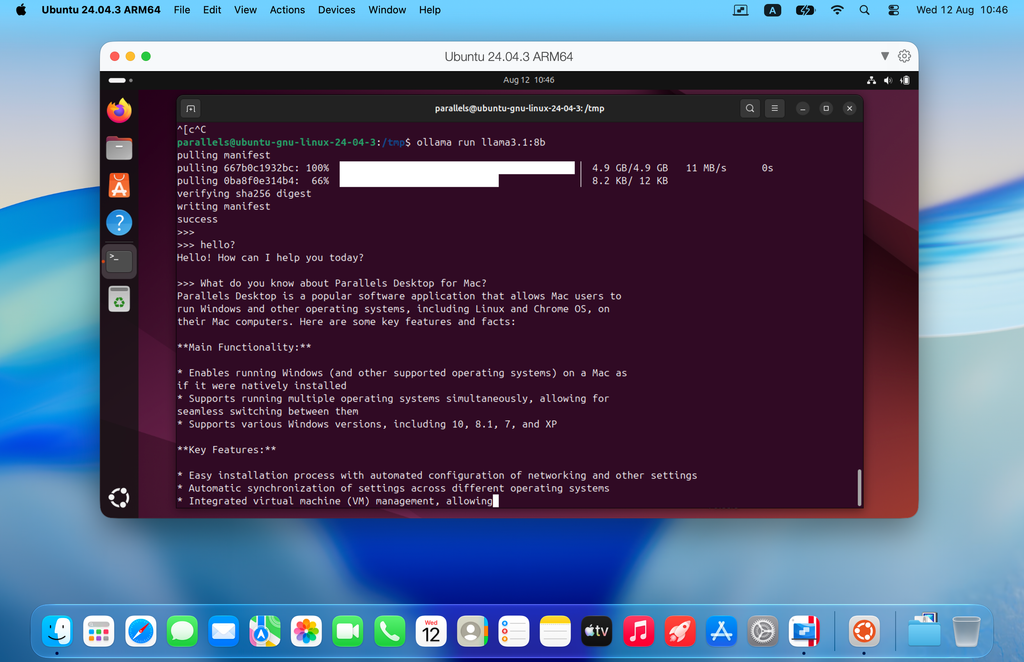
Parallels adds AI and machine learning acceleration
Parallels has added Apple’s Scalable Matrix Extension (SME) instructions support for Linux and Windows virtual machines on M4 and newer Macs. Developers can leverage faster AI model development, machine learning computations, and neural network processing while working locally. This update should also offer significant performance gains for popular AI tools running within virtual machines.
New enterprise features simplify license management
In addition to this, Parallels has introduced new management capabilities to help IT teams identify how software licenses are activated to simplify administration and reporting. The company has maintained its SOC 2 compliance to demonstrate its ongoing commitment to security and reliability. This release also brings other enterprise features to support secure virtual machine image distribution and automated deployment processes.
Parallels Desktop 27 enhances DevOps and automation workflows
Last but not least, Parallels Desktop 27 brings a new graphical interface that makes it easier to manage virtual machines, hosts, and automation workflows. The enhanced integration with Jenkins allows dynamic provisioning of virtual machines to improve build and testing processes in development environments.
Parallels Desktop 27 is designed for Apple silicon Macs and is available in Standard, Pro, Business, and Enterprise editions. Customers can purchase, upgrade, or download a trial version through Parallels and its authorized resellers.
Parallels Desktop 27 helps IT teams support diverse workloads on Macs
For IT administrators, Parallels Desktop 27 highlights how virtualization is becoming an important part of long-term endpoint strategy as organizations continue to balance Mac adoption with the need to support Windows-based business applications. This release reflects a broader shift toward providing employees with flexibility while allowing IT teams to maintain control, consistency, and governance across increasingly diverse device environments.
Additionally, this update supports the growing demand for high-performance workloads on corporate devices. As businesses expand their use of AI development, software testing, and specialized professional applications, IT leaders need platforms that can help maximize existing hardware investments rather than requiring separate systems for different tasks.

Rabia has a master's degree in Software Engineering and she has years of experience writing professionally about Microsoft products and other technologies. Rabia has also written for OnMSFT.com as well as Windows Report. She is always up to date on t...