Azure Event Grid Namespaces Add Autoscale for Dynamic Messaging Workloads
New capability automatically adjusts throughput capacity to match changing event and device traffic.

Key Takeaways:
- Autoscale automatically adjusts throughput units based on workload demand.
- Designed for event-driven and IoT applications with fluctuating traffic patterns.
- This feature is available in public preview for Azure Event Grid Namespaces Standard tier.
Microsoft is making Azure Event Grid more adaptive with the public preview of Autoscale for Event Grid Namespaces. The feature automatically scales Throughput Units (TUs) to match real-time demand, which helps organizations improve efficiency without manual intervention.
Azure Event Grid Namespaces are a scalable messaging environment within Azure that allow organizations to manage and distribute events, messages, and MQTT-based communications through a centralized service. They provide a unified way to connect applications, devices, and cloud services, which makes it easier to build event-driven and IoT solutions that can handle changing traffic volumes while maintaining reliability, security, and performance.
“Event Grid namespaces already provide control over capacity through throughput units. Each Throughput Unit defines a fixed rate of event ingress, event egress, MQTT publish, and MQTT client connections. Until now, customers set the Throughput Unit count at namespace creation and adjusted it manually when traffic patterns changed,” Microsoft explained.
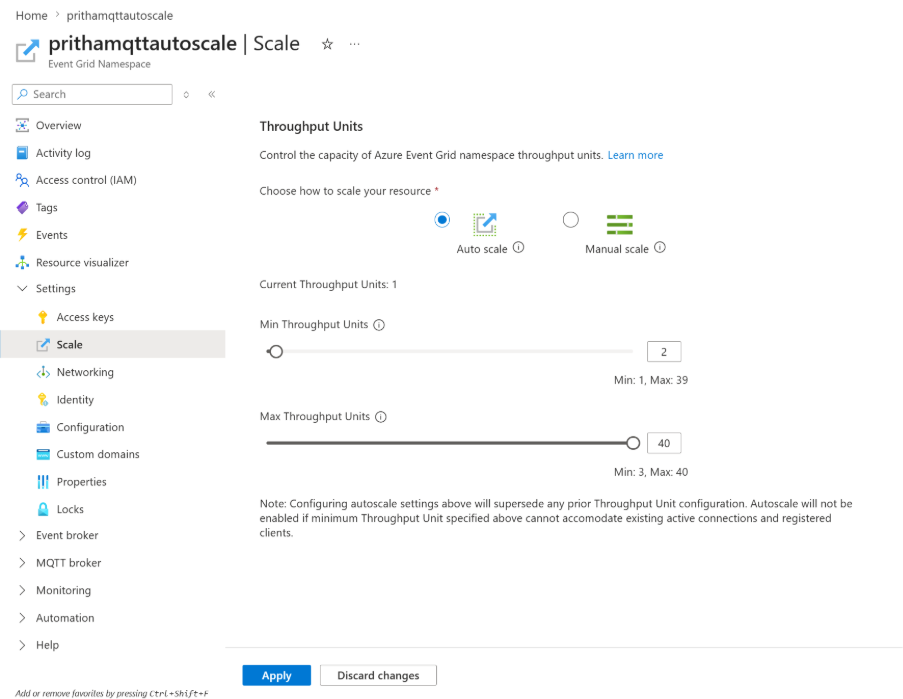
Key benefits of Azure Event Grid Autoscale
Microsoft highlighted that Autoscale builds on this capability, and it dynamically adjusts messaging resources in response to changing workloads. This helps IT admins handle sudden traffic spikes without manually resizing resources. Organizations can avoid overprovisioning resources during periods of low activity while still having sufficient capacity during peak demand. It leads to better resource utilization and potentially lower operational costs.
Autoscale is designed to be easy to set up and manage. Users only need to enable Autoscale and define the minimum and maximum TU limits. Once configured, Azure Event Grid automatically monitors workload demand and makes all scaling decisions internally, which removes the complexity of creating, tuning, and maintaining custom scaling policies or threshold-based rules.
Built for event-driven and IoT workloads
According to Microsoft, this feature is particularly valuable for IoT and event-driven applications where message volumes, device connections, and event delivery rates can fluctuate significantly. It helps maintain consistent performance during changing traffic conditions.
This Autoscale feature is useful for workloads that rely on Azure Event Grid for MQTT messaging, event routing, and large-scale event distribution. It keeps messaging services responsive as connection counts and throughput requirements change.
Microsoft notes that Autoscale is currently available in public preview for Azure Event Grid Namespaces in the Standard tier. Administrators can enable this feature through the Azure portal, ARM templates or REST API, and you can find more details on this support page.

Rabia has a master's degree in Software Engineering and she has years of experience writing professionally about Microsoft products and other technologies. Rabia has also written for OnMSFT.com as well as Windows Report. She is always up to date on t...