Microsoft Opens Pre-Orders for Surface Laptop Ultra and RTX Spark Dev Box
Microsoft's latest Surface devices bring AI computing closer to developers' desktops, but the company's broader strategy extends beyond faster hardware.

Key Takeaways:
- Microsoft’s Surface Laptop Ultra and Surface RTX Spark Dev Box are now available for pre-order.
- Both devices are designed to run large AI models locally with up to 128GB of unified memory.
- Microsoft is positioning local AI processing as a complement to cloud infrastructure for development and testing scenarios.
Microsoft is expanding its Surface hardware portfolio with the new Surface Laptop Ultra and Surface RTX Spark Dev Box, both of which are available for pre-order starting today. The company is targeting developers, AI engineers, and technical professionals looking to run AI and development workloads on local Windows hardware.
Surface Laptop Ultra targets demanding AI workloads
The Surface Laptop Ultra combines NVIDIA RTX graphics, NVIDIA Grace CPU technology, and up to 128GB of unified memory in a single system. This device is capable of running large AI models locally, which enables developers and technical users to perform AI inference, coding, and data processing tasks on-device.
This new laptop also includes a redesigned cooling system intended to sustain performance during resource-intensive workloads. Other hardware features include a 15-inch PixelSense display, user-replaceable storage, support for up to three external 4K monitors, HDMI, USB-C, USB-A, an SD card reader, and a headphone jack.
Surface RTX Spark Dev Box brings local AI compute to developers
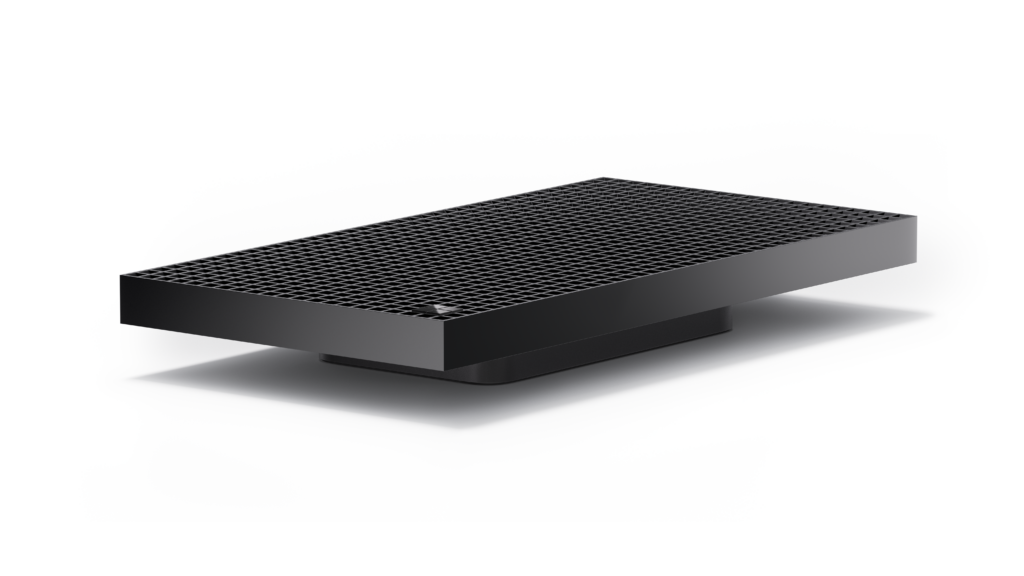
Microsoft also announced the Surface RTX Spark Dev Box, which is a compact desktop system built on the same NVIDIA platform. The company says this device is aimed at developers and AI teams that want local computing resources for testing, model evaluation, and application development.
The Surface RTX Spark Dev Box supports up to 128GB of unified memory and is designed to run large AI models locally. Microsoft is positioning this device as an alternative to relying exclusively on cloud infrastructure for development and experimentation workloads.
The Dev Box comes with commonly used developer tools, including Visual Studio Code, Git, GitHub CLI, Windows Subsystem for Linux (WSL), Python, Node.js, and GitHub Copilot.
Pricing and availability
The Surface Laptop Ultra is available for pre-order today at $2,599 and is expected to become available on October 16, 2026. The Surface RTX Spark Dev Box starts at $5,999 and will begin shipping in November 2026.
Microsoft linked both devices to its broader efforts around AI agents and local AI processing on Windows. The company said upcoming Windows and Microsoft Entra capabilities will help organizations manage and monitor AI agent activity while allowing organizations to combine local processing with cloud-based resources when necessary.
What the new Surface devices mean for organizations
For organizations building or testing AI applications, the new Surface devices could reduce dependence on cloud-based compute resources for some workloads. Developers may be able to run larger models, perform local testing, and use tools such as GitHub Copilot without sending every task to cloud infrastructure.
Organizations with software development, engineering, data science, or AI teams could also benefit from faster prototyping cycles, lower cloud consumption costs for certain workloads, and greater control over sensitive data that remains on local devices. However, cloud services will still be necessary for large-scale production deployments and workloads that exceed local hardware capabilities.

Rabia has a master's degree in Software Engineering and she has years of experience writing professionally about Microsoft products and other technologies. Rabia has also written for OnMSFT.com as well as Windows Report. She is always up to date on t...