Microsoft Adds User-Initiated Provisioning to Windows 365 Reserve Cloud PCs
Microsoft's new self-service provisioning feature lets eligible users deploy Windows 365 Reserve Cloud PCs on demand.

Key Takeaways:
- Windows 365 Reserve now supports user-initiated provisioning for eligible employees.
- This feature reduces IT bottlenecks when users need replacement or temporary Cloud PCs.
- Organizations will need to balance faster access with governance and compliance requirements.
Organizations adopting cloud PCs often face delays when employees need temporary or replacement devices. Traditional provisioning workflows typically require IT administrators to manually assign and configure resources, which creates additional workload and slows user access to computing environments. These administrative dependencies can become more noticeable when businesses need to quickly restore productivity for users experiencing device issues.
According to Microsoft, employees may wait longer to regain access to their work environments, which reduces productivity and places pressure on IT teams already managing device deployments, security requirements, and support requests. As businesses increasingly depend on cloud-based workspaces, delays in provisioning can affect user experience and operational efficiency.
Microsoft adds user-initiated provisioning for Windows 365 Reserve
To address this challenge, Microsoft has announced the general availability of user-initiated provisioning for Windows 365 Reserve. This new capability allows eligible users to provision their own Windows 365 Reserve Cloud PCs when needed, which reduces reliance on IT administrators for the final provisioning step. This feature is designed to accelerate access to reserve cloud environments while helping organizations maintain business continuity when a primary device is unavailable.
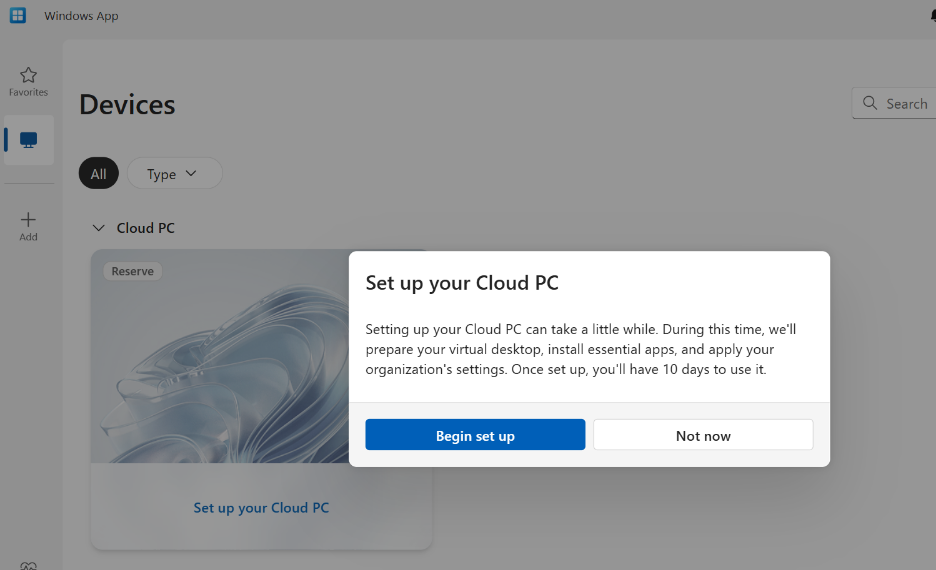
However, this change also indicates a broader tradeoff between user autonomy and centralized IT control. Self-service provisioning can speed up access and reduce administrative overhead, but organizations must still determine which users are eligible and ensure that governance, compliance, and resource management policies remain in place.
This feature may improve agility and end-user experience, but IT departments will need to balance those benefits against oversight and operational considerations.

Rabia has a master's degree in Software Engineering and she has years of experience writing professionally about Microsoft products and other technologies. Rabia has also written for OnMSFT.com as well as Windows Report. She is always up to date on t...