Microsoft Security Exposure Management Adds Unified Risk Prioritization Dashboard
The redesigned Exposure Management dashboard is now available in public preview.

Key Takeaways:
- Exposure and security findings are now consolidated into a single dashboard.
- The experience highlights high-priority risks through Resolve Now and Monitor Exposure workflows.
- The redesigned experience is available in public preview through the Microsoft Defender portal.
Microsoft has introduced a new Exposure Resolution dashboard experience in Microsoft Security Exposure Management. This new feature is designed to help security teams focus on the most important risks instead of sorting through large volumes of findings and disconnected dashboards.
Security teams are overwhelmed by a growing number of vulnerabilities, exposure findings, and security alerts across multiple tools and dashboards. This makes it difficult to determine which issues pose the greatest risk and should be addressed first. Consequently, security teams can waste valuable time investigating low-priority findings while critical exposures remain unresolved.
How does the new dashboard help prioritize critical exposures?
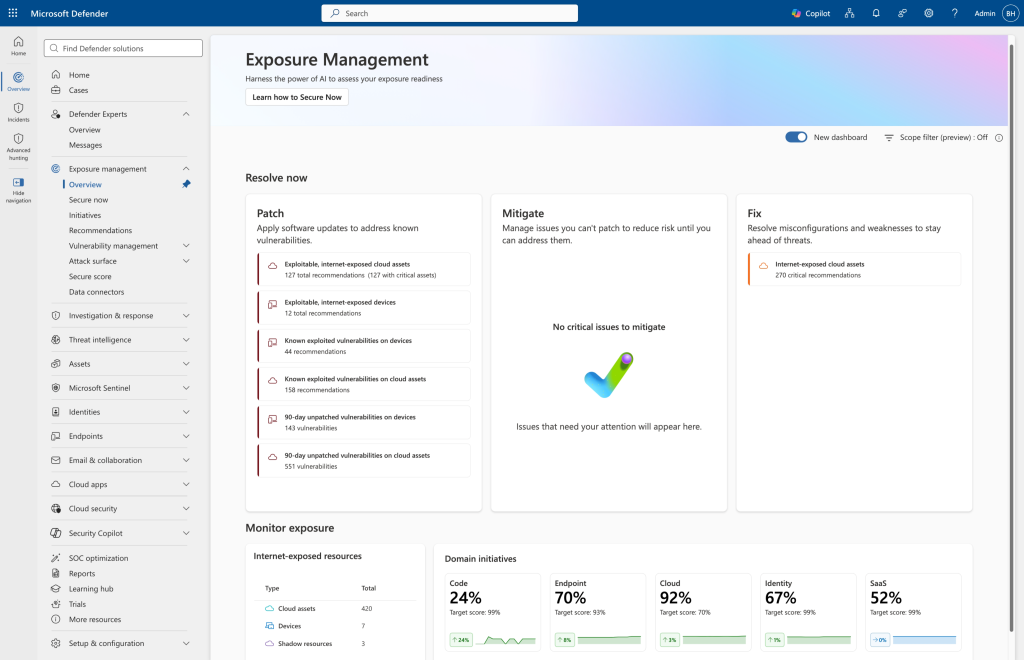
This redesigned Exposure Management dashboard brings exposure and security findings together in a single view. The dashboard helps security teams understand which exposures present the greatest risk to the organization and should be addressed first.
“The Microsoft Security Exposure Management dashboard in the Microsoft Defender portal gives security teams a consolidated, action-oriented view of exposure risk. It consolidates signals from cloud resources and devices, combining internet exposure vulnerabilities, security misconfigurations, and broader risk factors into a single experience, and organizes work around two core actions: Resolve Now and Monitor Exposure,” Microsoft explained.
Reducing alert fatigue with actionable exposure insights
This release enables security teams to cut through alert fatigue and gain clearer visibility into exposure data, which allows them to make more informed remediation decisions. The experience is designed to support faster resolution by highlighting exposures and providing context that helps organizations determine the most effective remediation actions.
The redesigned dashboard is currently available as a public preview for Microsoft Security Exposure Management customers through the Microsoft Defender portal. This update will allow security teams to spend less time investigating findings and more time reducing organizational risk.

Rabia has a master's degree in Software Engineering and she has years of experience writing professionally about Microsoft products and other technologies. Rabia has also written for OnMSFT.com as well as Windows Report. She is always up to date on t...